
External Wall Insulation Contractors in Ireland, Booked Before Winter
228 SEAI-registered EWI installers across 26 counties. Render needs dry weather to go on properly, so the season to book is now.
Why External Wall Insulation Is the Biggest Upgrade a Solid-Wall Home Can Make
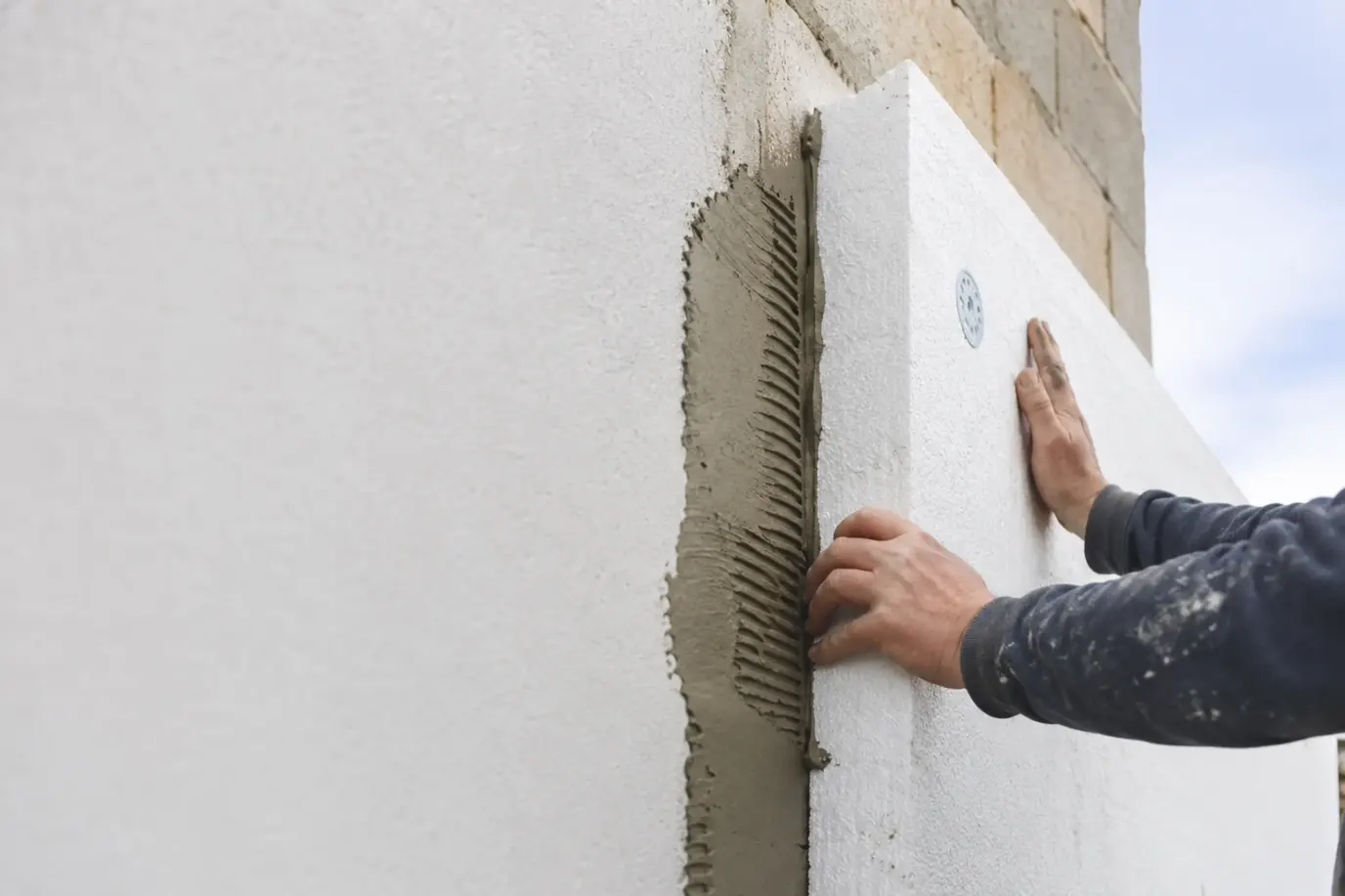
External wall insulation contractors fix insulation boards to the outside of your walls and finish them with a render coat, so the whole house sits inside a continuous layer rather than losing heat through the masonry. On a solid-wall home, where there is no cavity to fill, it is the single biggest change you can make to how warm the house feels and how much it costs to heat.
It is also the option most people rule out too early, usually because they assume it is only for new builds or that it will look wrong on an older house. Neither is true. The work suits exactly the sort of houses that are hardest to heat: solid-wall builds, older bungalows, and anything that has never been insulated properly.
Every contractor listed here is drawn from the official SEAI register, which is what keeps the work grant-eligible. You contact them directly. There is no middleman, no booking fee and no lead selling.
Find External Wall Insulation Contractors in Your County
All 26 counties, with the number of SEAI-registered external wall insulation contractors covering each one. Pick yours to see who they are and how to contact them.
Will It Be Done Before Winter?
This is a wet trade. The render coat needs dry, mild conditions to go on and cure properly, which means the practical working window narrows as autumn sets in and reopens again in spring.
That matters more than it sounds. A decision made now is a house that is warm this winter. The same decision made in November usually means waiting until spring, and paying to heat an uninsulated house through another cold season in the meantime.
If you are weighing it up, the useful question is not whether the work is worth doing. It is whether you want the benefit this year or next.
Get Quotes While the Season Is OpenWhat a Wrapped House Actually Looks Like
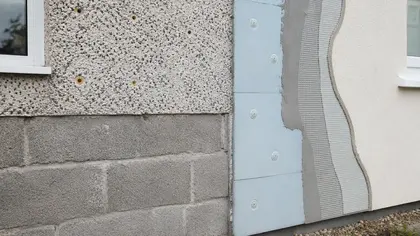
The same house, the same angle, before the work and after it. Walls end up slightly thicker, reveals deeper, and the finish is a fresh render in a colour you choose.


What Happens During an External Wall Insulation Installation
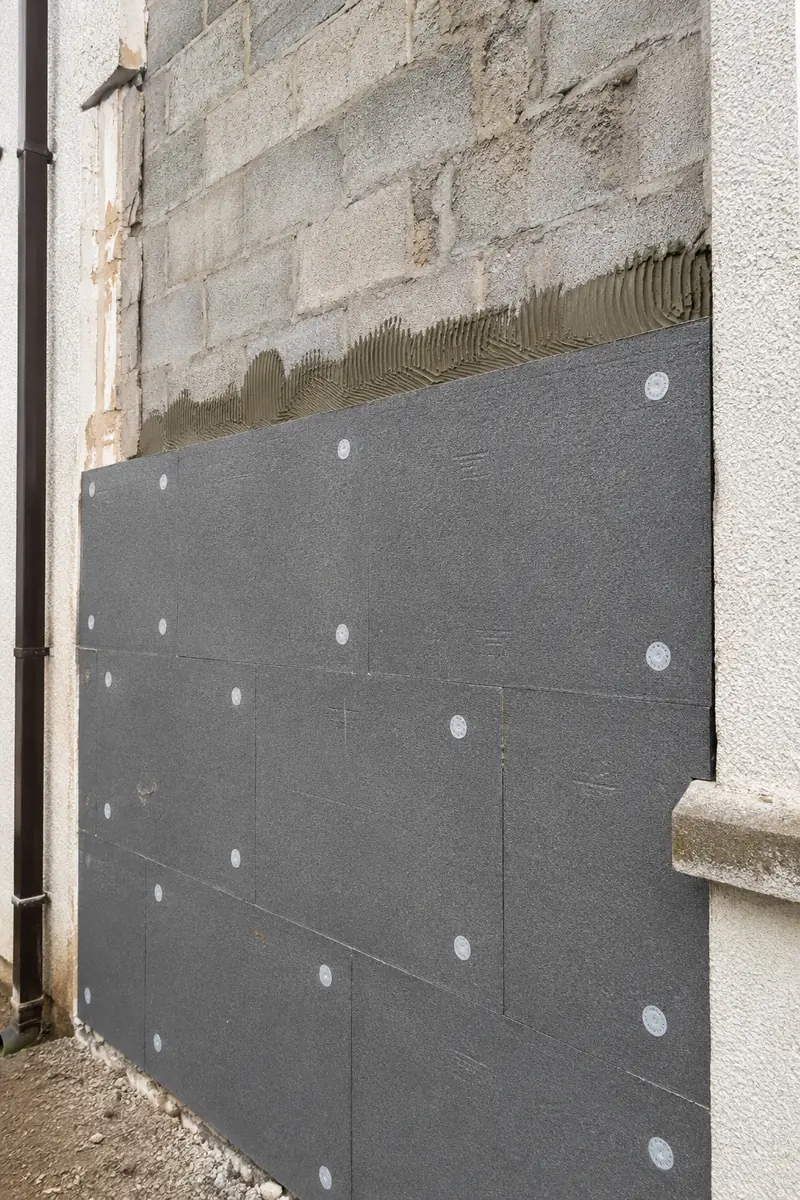
Scaffold goes up first, and downpipes, sills and any external fittings come off so the insulation can run behind them rather than stopping short. A base rail is levelled along the bottom of the wall, and the boards are fixed course by course from there, bonded and mechanically fixed back into the masonry.
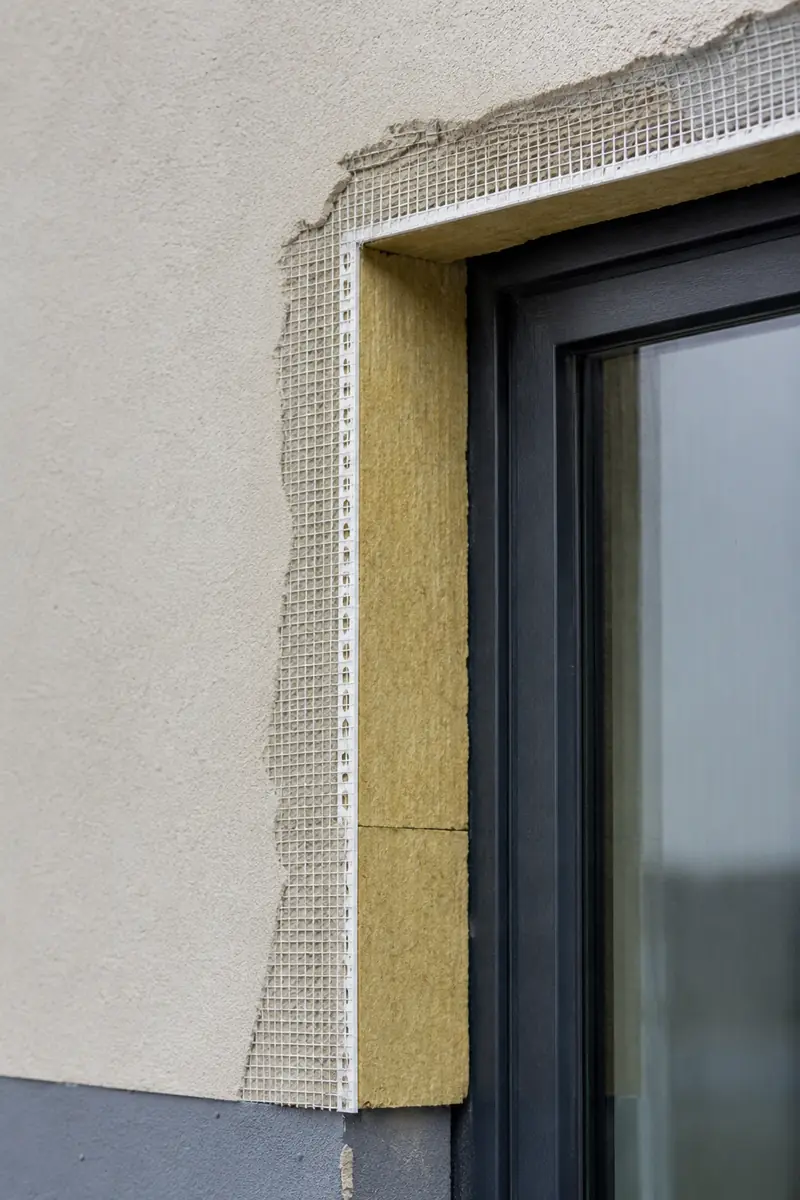
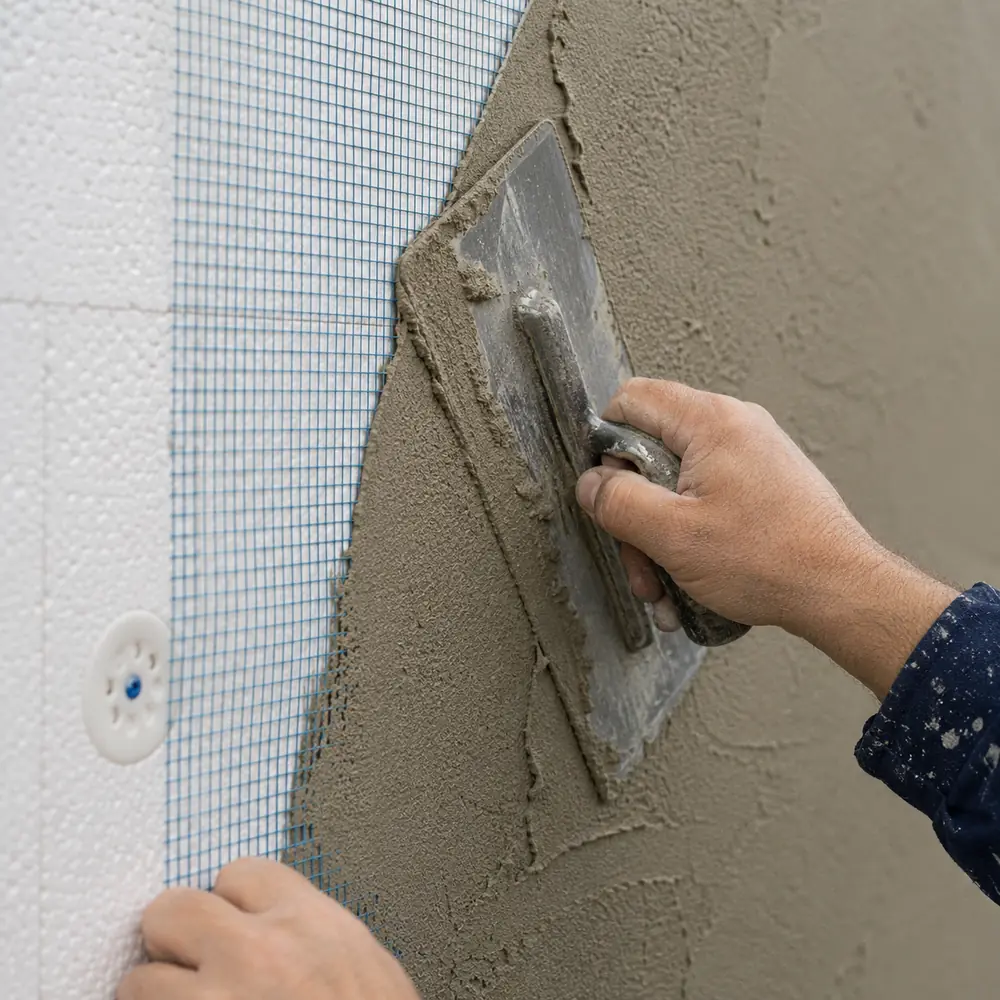
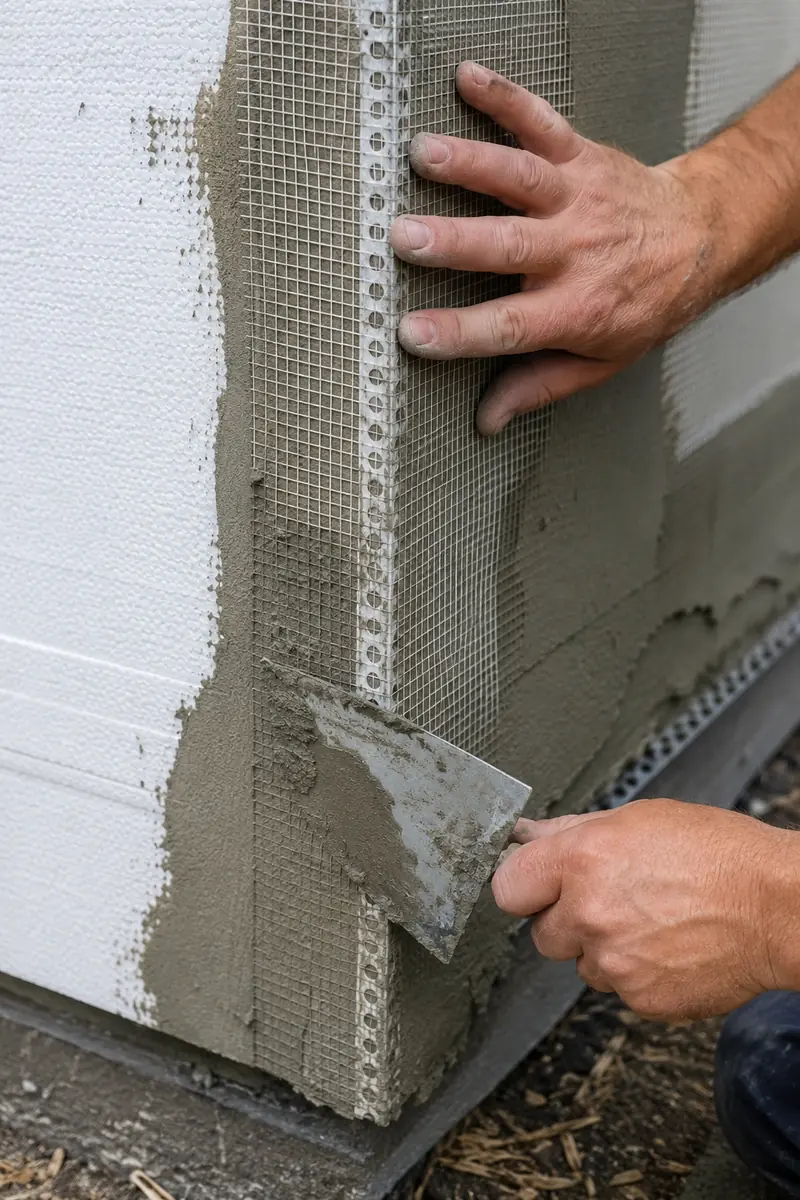
Once the boards are on, a base coat goes over them with a reinforcing mesh embedded in it, and beading goes to every corner and reveal. That layer is what makes the finish durable rather than fragile. The topcoat render follows, in the finish and colour you have chosen, and everything that came off the wall goes back on over the new surface.
The detailing around windows, doors and eaves is where a good job separates from a rushed one, and it is worth asking any contractor to talk you through how they handle reveals before you agree anything.
How Much Does External Wall Insulation Cost in Ireland?
A typical semi-detached home comes in between €12,000 and €18,000 before any grant. With the SEAI grant of up to €8,000, most homeowners end up paying somewhere between €4,000 and €10,000.
Before the Grant
€12,000 to €18,000
Driven by the size of the house, how much detailing there is around windows and doors, and how easily scaffolding can be set up.
SEAI Grant
Up to €8,000
Paid on completion, and only where the work is carried out by a contractor on the SEAI register. That is the reason this directory only lists registered contractors.
What You Actually Pay
€4,000 to €10,000
The realistic net figure for most homes once the grant is applied. Always get three quotes before committing.
| Property type | Before the grant | SEAI grant | What you pay |
|---|---|---|---|
| Mid-terrace, 3 bed | €8,000 – €12,000 | up to €4,500 | €3,500 – €7,500 |
| Semi-detached, 3 bed | €12,000 – €18,000 | up to €6,000 | €6,000 – €12,000 |
| Detached, 4 bed | €18,000 – €26,000 | up to €8,000 | €10,000 – €18,000 |
| Large bungalow | €16,000 – €24,000 | up to €8,000 | €8,000 – €16,000 |
Indicative market guidance, not a quote. The grant is set by property type and the cost by the house, so the gap between them varies more than either figure does.
Is Your Home Suitable for External Wall Insulation?
External wall insulation suits solid-wall houses best, because there is no cavity to fill and the walls are otherwise very hard to insulate at all. Older bungalows, pre-1980s builds and anything with cold, unrendered masonry are the clearest candidates.
If your walls have a usable cavity, cavity wall insulation is usually cheaper and less disruptive, so it is worth establishing which you have before going further. Protected structures and homes in architectural conservation areas need approval from the local authority, and that check should happen before anything is ordered.
The one thing to sort out first is any existing defect. If water is getting in through a crack, a failed gutter or a leaking downpipe, fix that before you wrap the wall, because insulation over an active leak traps the problem rather than solving it.
- Solid walls with no cavity to fill
- Cold, hard-to-heat rooms on external walls
- Black mould in corners and around reveals
- Render that is tired, cracked or never renewed
- A house you plan to stay in long enough to feel the benefit
Render Finishes, and the One Decision You Cannot Change Later
The insulation decides how warm the house is. The render decides how it looks for the next twenty-five years, and it is the part homeowners spend least time on at quote stage and most time regretting.
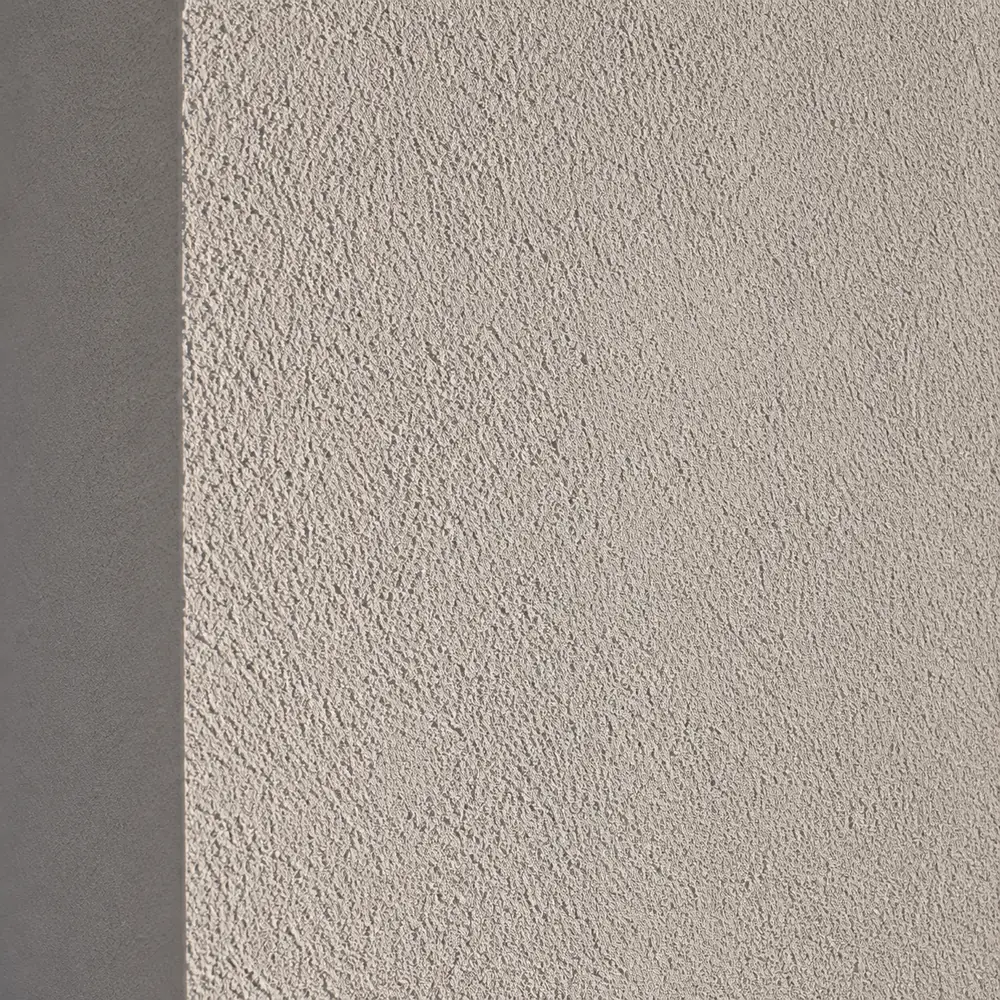
Three finishes cover almost every job in Ireland. Acrylic and silicone thin-coat renders are the common choice: flexible, available in effectively any colour, and applied in a thin decorative layer over the base coat. Silicone costs a little more and sheds water better, which matters on an exposed or north-facing elevation where a cheaper acrylic will hold dirt. Mineral render is the traditional option, breathable and very durable, but the colour range is narrower and it is more prone to hairline crazing.
The choice interacts with the site rather than being a matter of taste alone. A coastal or heavily exposed wall wants the finish chosen for water shedding first and colour second, and a contractor who leads with the colour chart before asking which way the house faces is not specifying, they are selling.
Colour is worth thinking about properly because it is genuinely permanent in a way paint is not. Repainting rendered insulation is possible but it is a scaffolding job, so the practical answer is that you pick once.
| Finish | Typical life | Best for | Trade-off |
|---|---|---|---|
| Silicone thin-coat | 25+ years | Exposed and coastal walls | Costs more per square metre |
| Acrylic thin-coat | 20–25 years | Sheltered inland sites | Holds dirt on damp elevations |
| Mineral render | 30+ years | Breathability, older solid walls | Narrower colour range, can craze |
Where a Good Job Separates From a Cheap One
The flat run of wall is straightforward, and every contractor gets it right. The difference between a job that still looks correct in ten years and one that does not is entirely in the details around openings and edges, which is where cheap quotes quietly save their money.
Window and door reveals are the clearest example. The insulation has to return into the reveal, in a thinner board, so the frame is not left as a cold bridge running straight through the new layer. Skipping the return saves a day of labour and produces exactly the black mould around the window that the homeowner insulated to get rid of.
Below the insulation there has to be a base rail, levelled and fixed, to carry the bottom course and stop water tracking behind. At the top, the insulation has to meet the eaves properly, which often means the roof overhang is too shallow and needs extending. A quote that does not mention the eaves on a house with a tight overhang has not looked at the roof.
Everything fixed to the old wall has to come off and go back on over the new surface: downpipes, sills, vents, meter boxes, satellite brackets, external lights. Sills in particular usually need replacing rather than refitting, because the original will no longer project far enough past the thicker wall to throw water clear.
- Insulation returned into every window and door reveal
- A levelled base rail carrying the bottom course
- Eaves extended where the overhang is too shallow
- Sills replaced so they still throw water clear of the wall
- Beading to every corner, and mesh lapped at openings
- Fire barriers at the positions the system certification requires
Living With It Afterwards
A correctly installed system is close to maintenance-free, which is one of the reasons it is worth paying for the detailing. The render is designed to be washed down rather than repainted, and an occasional rinse deals with the green film that builds up on a north-facing wall.
The two things that cause problems later are both avoidable. Drilling into the render to mount something without using the right fixing punches through the weather layer and lets water into the insulation behind, so anything that needs fixing to the wall afterwards should be discussed with the installer. And a hairline crack that appears in the first year is normally a movement crack in the topcoat rather than a failure, but it should be reported inside the guarantee period rather than watched.
Expect the house to behave differently. Rooms hold heat noticeably longer, which means the heating comes on less and runs for shorter periods, and it also means the house is slower to cool down in warm weather. Ventilation matters more once the fabric is tighter, so extract fans need to work and trickle vents need to stay open.
External Wall Insulation: Common Questions
What Is External Wall Insulation Also Called?
External wall insulation goes by several names. You will hear it called EWI, external insulation, exterior wall insulation, solid wall insulation, and plenty of people simply call it wrapping the house. They all describe the same job: fixing insulation boards to the outside of your walls and finishing them with a render coat.
How Much Does External Wall Insulation Cost in Ireland?
A typical semi-detached home costs €12,000 to €18,000 before any grant. With the SEAI grant of up to €8,000, most homeowners end up paying €4,000 to €10,000. The final figure depends on the size of the house, how much detailing is involved around windows and doors, and access for scaffolding.
Will External Wall Insulation Stop Damp and Mould?
It stops one kind, and it is worth being clear about which. External insulation keeps the inner face of your walls warm, so moisture in the air stops condensing on cold surfaces. That is what causes the black mould you see in corners, behind wardrobes and around window reveals, and insulating outside deals with it properly. It does not fix rising damp, which needs a damp-proof course, and it does not fix penetrating damp coming through a defect. If you have either of those, get the cause repaired first.
Is There a Best Time of Year to Have It Done?
Yes. This is a wet trade, and the render coat needs dry, mild conditions to go on and cure properly. That means the practical working window narrows as autumn sets in and reopens in spring. Booking through the summer and early autumn is how you get the house finished before the cold rather than waiting out another winter.
How Long Does the Work Take?
Most homes are done inside a few weeks from scaffold going up to scaffold coming down, though the render needs curing time between coats and wet weather will add days. Your contractor will give you a realistic programme once they have seen the house.
Do I Need Planning Permission for External Wall Insulation?
For most houses it is not required, because the work is treated as improvement rather than extension. Protected structures and homes in architectural conservation areas are the exception and need to be checked with your local authority before anything is ordered. Your contractor should raise this with you unprompted.
Will It Change How My House Looks?
Yes, and usually for the better. The walls end up slightly thicker, window reveals become deeper, and you get a fresh render finish in a colour you choose. Sills, downpipes and any external fittings are removed and re-fixed over the new surface, which is part of why the detailing matters and why a rushed job is obvious afterwards.
Does Every Contractor on This Site Qualify for the Grant?
Every external wall insulation contractor listed here is drawn from the official SEAI register. Using a registered contractor is what makes the work grant-eligible, so choosing from the register protects the grant. Always get three quotes and check the registration before you commit.
Get Your Home Wrapped This Season
228 SEAI-registered external wall insulation contractors across 26 counties. Contact them directly, compare three quotes, and get the work done while the weather still allows it.