
What a BER Actually Measures
A Building Energy Rating is a calculated figure, not a measured one. An assessor records the construction, insulation, heating system, ventilation and glazing, and software produces the energy a standardised household would use per square metre per year. That number lands on the A1 to G scale.
Because it is calculated rather than measured, it does not describe your bills. It describes the house independent of who lives in it, which is exactly what makes it comparable between properties, and also why a well-run G-rated house can cost less to heat than a carelessly-run C.
It is legally required when selling or renting, and it has to be in the advertisement, which is why it tends to be the moment homeowners think about insulation for the first time.
What Insulation Typically Moves It By
Ratings move in bands, so a change that shifts you from a D2 to a D1 feels like nothing and a slightly larger one that crosses into C3 feels like a lot. The figures below are indicative rather than a promise: the same measure moves a solid-wall bungalow much further than a well-built 2005 semi that already has most of it.
| Measure | Typical movement | Why it varies |
|---|---|---|
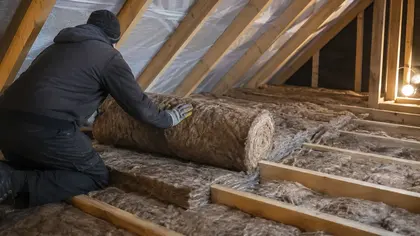
| Attic insulation | Half a band to one band | Depends entirely on what depth is up there now |
| Cavity wall insulation | One band | Only applies if the cavity is unfilled |
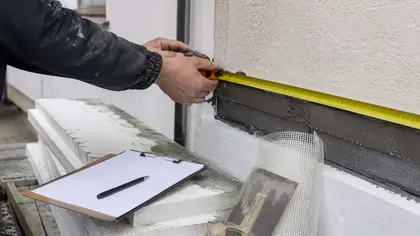
| External wall insulation | One to two bands | The largest single move available on a solid-wall house |
| Dry lining | One to two bands | Similar to external, applied to fewer walls in practice |
| All of the above together | Two to three bands | Where a deep retrofit gets to a B |
Walls are where the movement is
Attic insulation is the cheapest measure and the fastest payback, but on an uninsulated house the walls are the largest single source of heat loss, so wall insulation is what moves the rating furthest. The cheap measure and the effective measure are not the same measure.
Where the Rating Has Real Consequences
Selling is the obvious one. The BER goes in the advertisement, buyers compare it, and a poor rating invites a discount on the asking price that is usually larger than the cost of fixing it.
Renting is stricter than most landlords expect, and the direction of travel across Europe is toward minimum standards for rental property, so a low-rated rental is a problem with a date attached rather than a permanent status quo.
The deeper SEAI schemes are the third. The individual Better Energy Homes grants have no rating requirement, but the One Stop Shop route is built around getting a home to a B2, which is what shapes the package of measures they will propose.
Getting a BER Assessment
An assessment is carried out by an SEAI-registered BER assessor, takes an hour or two on site, and is valid for ten years unless the house changes materially. Expect somewhere in the region of €150 to €300 depending on the property and the assessor.
The single most useful thing you can do is have the paperwork ready. An assessor has to record what they can verify, and anything they cannot verify is assumed at a default value that is almost always worse than reality.
- Receipts and specifications for any insulation already installed
- The age and model of the boiler or heat pump
- Window specifications, or at least the year they were replaced
- Anything documenting a previous grant-assisted upgrade
- Attic access cleared, so the depth up there can actually be measured