Why the Material Is Chosen for You
Almost every insulation job in Ireland uses one of four materials, and which one you get is decided by where it is going rather than by which performs best on paper. A cavity has to be filled with something that can be injected. A roof slope has to take something that can be cut and fixed between rafters. An internal wall has to take something that can be bonded to plasterboard.
What is worth understanding is the trade-off inside each choice, because that is where a quote either makes sense or does not. The headline number is lambda, the thermal conductivity: the lower it is, the less thickness you need for the same performance. A material with a lower lambda costs more per square metre and takes up less room, which matters a great deal internally and hardly at all in an open attic.
The Four Materials, and Where Each One Goes
The table is the short version. A contractor should be able to say which they are quoting and why, and a quote that does not name the material is not a quote you can compare against another one.
| Material | Lambda (W/mK) | Where it goes | The trade-off |
|---|---|---|---|
| EPS board | 0.031 – 0.038 | External walls, floors | Cheapest board, but needs more thickness than PIR for the same result |
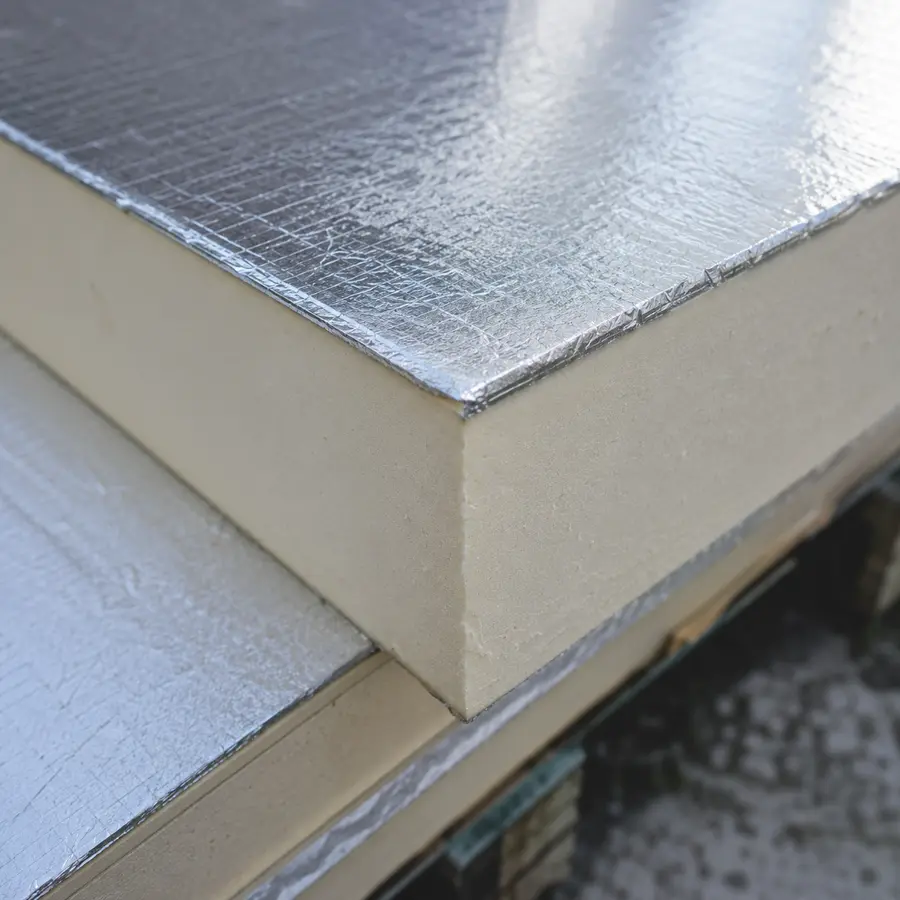
| PIR board | 0.022 – 0.028 | Internal dry lining, roof slopes, floors | Best performance per millimetre, so it wins where space is tight. Costs more |
| Mineral wool | 0.032 – 0.044 | Attics, between rafters and studs | Cheap, non-combustible and easy to lay. Bulky, and it compresses |
| Bonded bead | 0.033 – 0.040 | Cavity walls only | Injected, so nothing has to come apart. Only works if there is a clear cavity |
The number that actually matters is the finished U-value
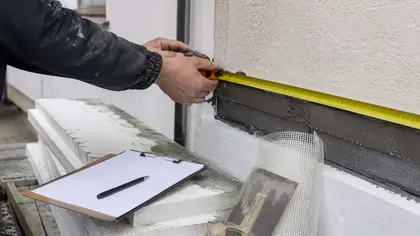
Lambda describes the material. The U-value describes the finished wall or roof, including the thickness used and everything around it. A thick layer of a mediocre material can beat a thin layer of an excellent one, so ask for the U-value the quote is designed to achieve rather than comparing materials in the abstract.
EPS or PIR: the Choice That Costs You Space
This is the one comparison worth understanding, because it is the one where the cheaper option has a real cost attached. PIR conducts heat at roughly two thirds the rate of EPS, so a PIR board hits the same performance at about two thirds the thickness.
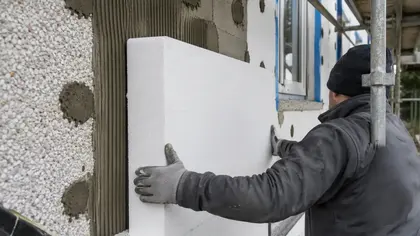
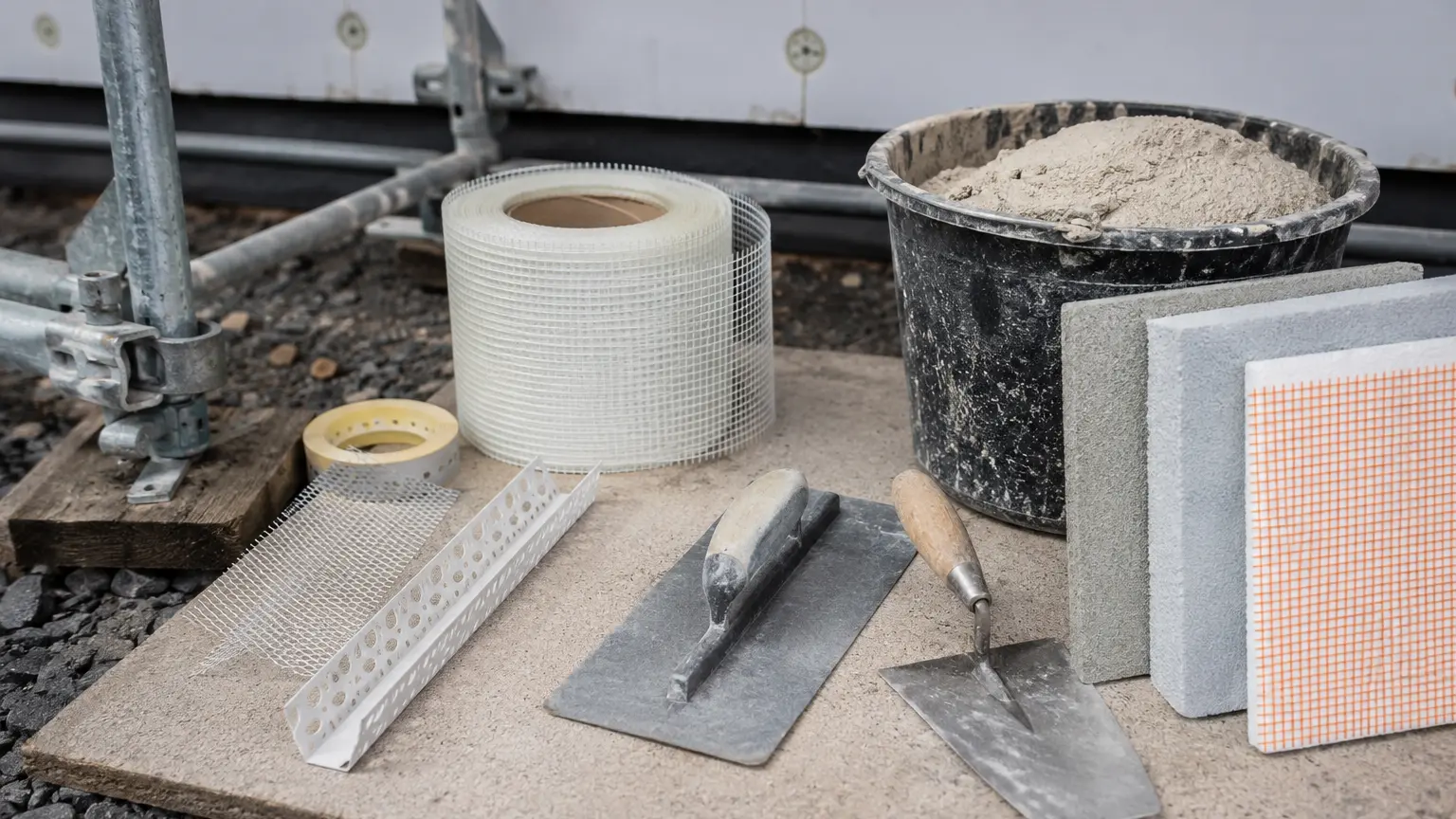
Externally that difference barely matters. The wall is being built outward into open air, so an extra 30mm of EPS costs almost nothing in practice and saves money on the board. EPS is the standard choice for external wall insulation for exactly that reason.
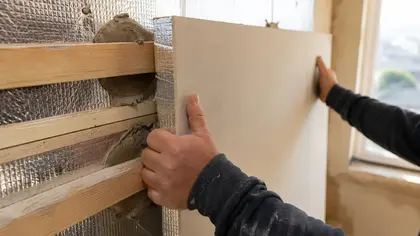
Internally it matters a lot. Dry lining takes the depth off the inside of the room, so 100mm of EPS and 70mm of PIR performing identically are not the same outcome: one costs you 30mm more off every treated wall. In a small bedroom or a hallway that is the difference between acceptable and noticeable, which is why internal work is usually quoted in PIR.
Where Mineral Wool Still Wins
Mineral wool has the worst lambda of the four and is still the right answer in an attic, because an open attic has unlimited depth. Nothing is gained by paying for a board that fits in less space when there is no shortage of space, and wool is cheaper, easier to lay around awkward joists, and non-combustible.
It has two weaknesses to know about. It compresses, so boarding straight over it for storage undoes the upgrade, and it performs badly when damp, so a leak has to be fixed before it goes down.
Bonded Bead, and Why It Is Bonded
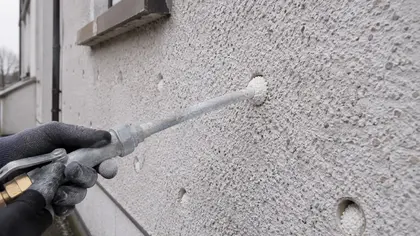
Cavity walls are filled rather than lined, so the material has to be something that can be blown in through a 22mm hole. Bonded bead is the standard: small polystyrene beads coated in adhesive that stick to each other once inside.
The bonding is the point. Loose fill can slump over years, leaving an uninsulated band at the top of the wall that nobody can see. Bonded bead sets as a mass and stays where it was put. Mineral wool fibre and polyurethane foam are also approved, and a contractor may prefer one for a narrow or awkward cavity.