
Cavity Wall Insulation in Ireland
How cavity wall insulation works, what it costs in 2026 and how to claim the SEAI grant of up to €1,800 (as of July 2026).
Cavity Wall Insulation: A Half-Day Job That Pays Back Within Three Years
Walls are typically the largest single source of heat loss in an uninsulated Irish home, and much of it escapes through the walls. For homes with an unfilled cavity, filling it is the quickest wall upgrade available with no external works and a grant that often covers the full cost.
Most Irish homes built between the 1920s and 1990s have cavity walls: an outer leaf of brick or block, an air gap, and an inner leaf. That gap is a thermal weak point. Filling it with bonded bead, mineral wool or foam reduces wall heat loss by up to 60 percent.
Every contractor listed here is drawn from the official SEAI register, which is what keeps the work grant-eligible. You contact them directly, with no middleman and no booking fee.
Find Cavity Wall Insulation Contractors in Your County
All 25 counties, with the number of SEAI-registered cavity wall insulation contractors covering each one. Pick yours to see who they are and how to contact them.
How Much Will You Save on Heating Bills?
Walls are typically the largest single source of heat loss in an uninsulated Irish home. Filling a previously empty cavity reduces wall heat loss by up to 60 percent, and typically cuts overall heating bills by 15 to 25 percent depending on home type and heating system.
What that is worth on your bill depends on the house, the heating system and energy prices, so ask a contractor who has surveyed it. With the SEAI grant covering most or all of the install cost, there is usually very little left to earn back.
Find a Cavity Contractor Near YouWhat Happens During a Cavity Wall Insulation Job
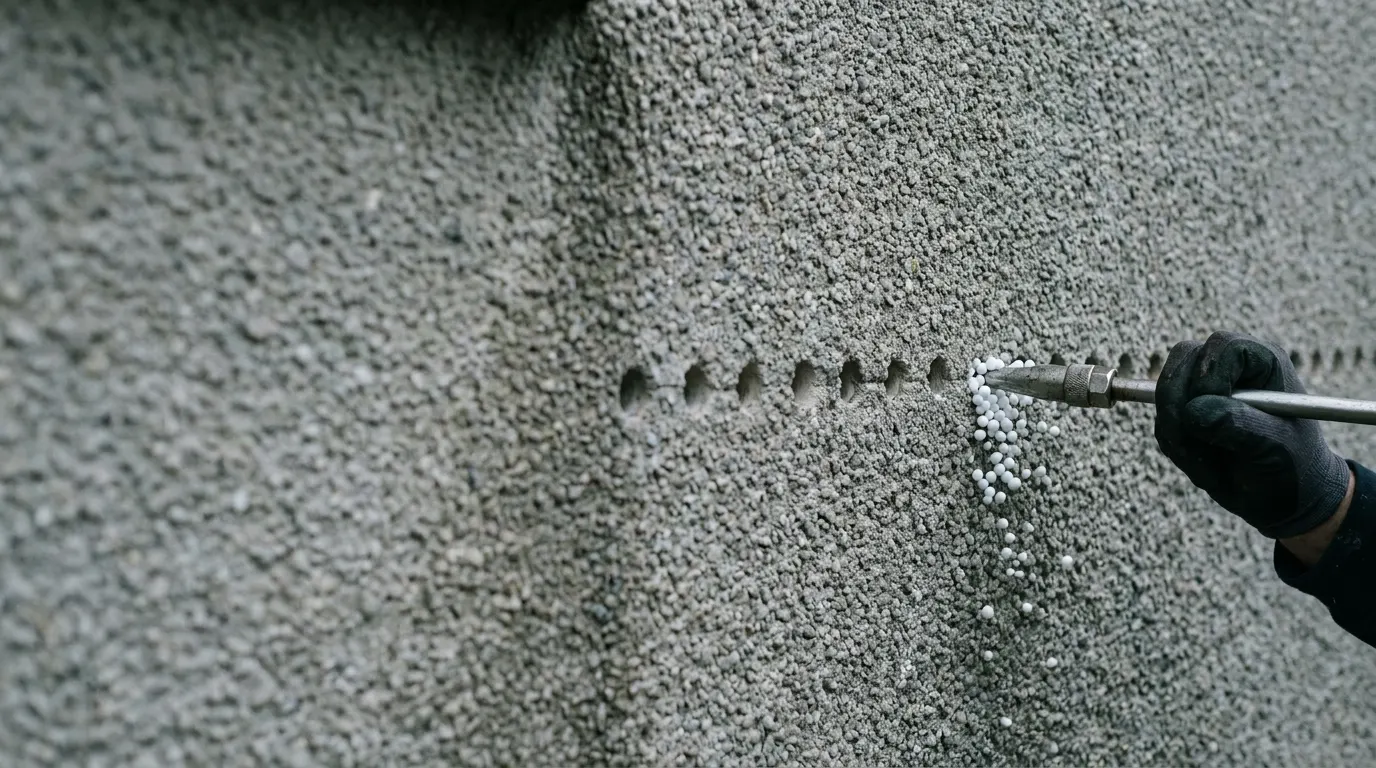
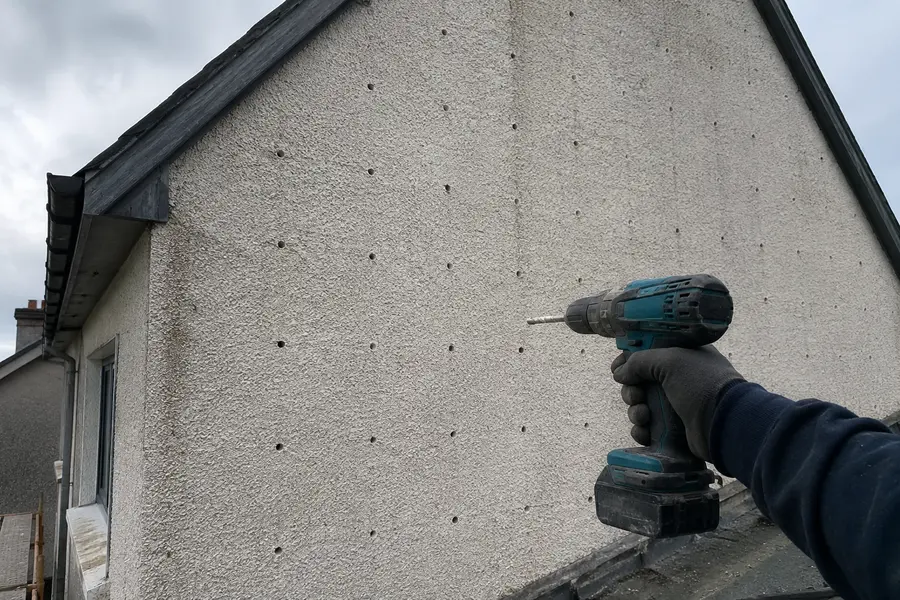
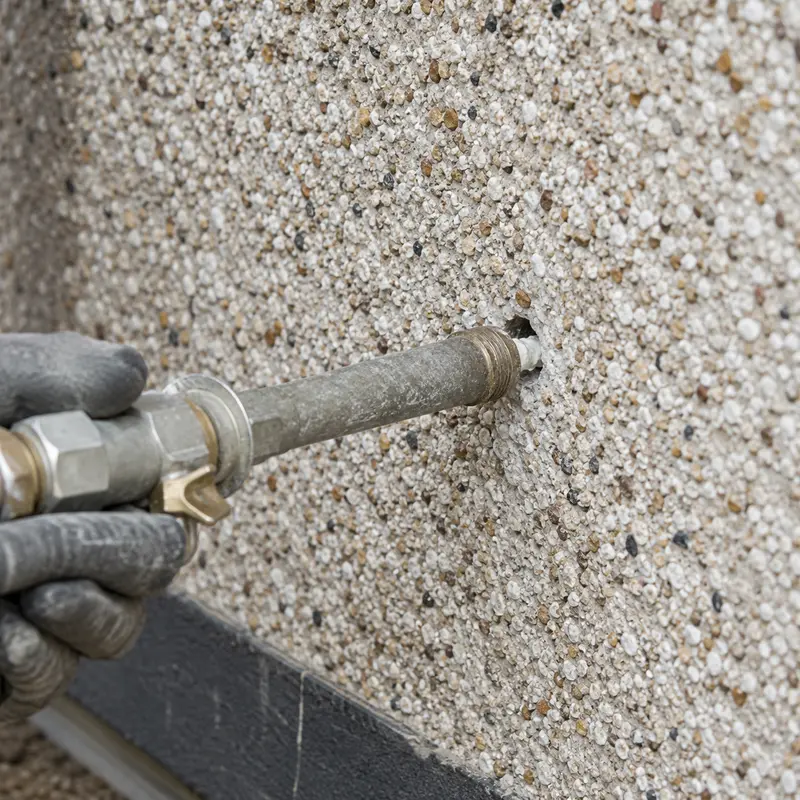
The contractor drills a grid of small holes, around 22mm, across the outer face of the wall at intervals of roughly 1 metre. A nozzle is inserted and insulation material is blown or injected until the cavity is fully filled. The holes are then plugged and pointed to match the existing finish.
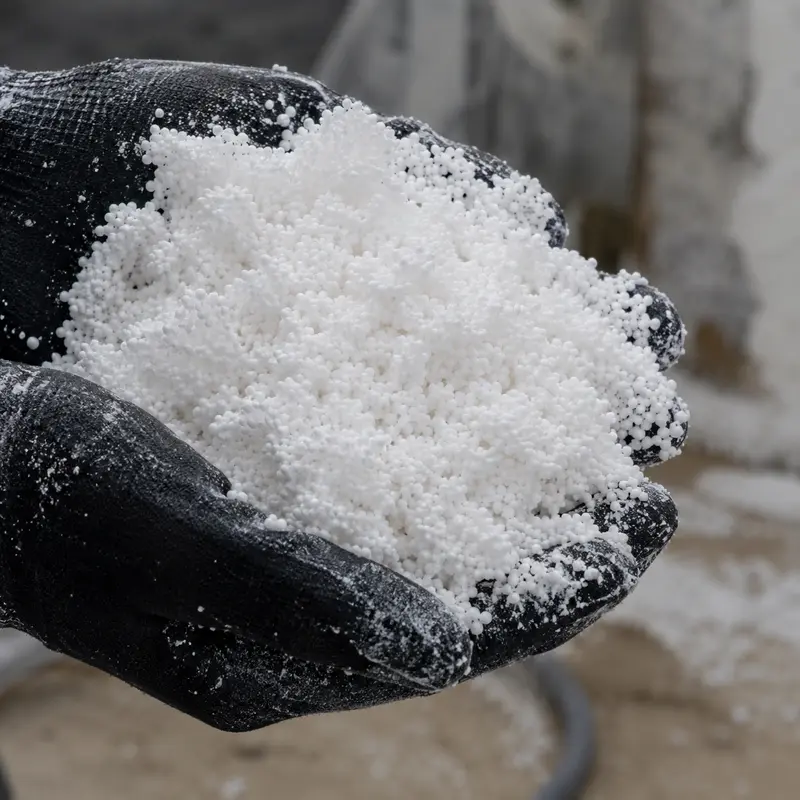
The three materials approved under the SEAI scheme are EPS bonded bead, which is the most common, mineral wool fibre and polyurethane foam. Bonded bead is the standard choice, because the beads are coated in adhesive so they bond together, eliminating slumping and moisture movement over time.
All work takes place from outside, so there is no internal disruption and no need to vacate the property. A standard semi-detached home is typically complete in two to four hours, and the finished drill holes are barely visible in brickwork and invisible under render.
How Much Does Cavity Wall Insulation Cost in Ireland?
A standard semi-detached home costs €800 to €1,400 before the SEAI grant. Through a One Stop Shop the grant comes off the price upfront; apply yourself and SEAI pays you once the work is signed off.
Before the Grant
€800 to €1,400
For a three-bed semi-detached home. An apartment or mid-terrace runs €500 to €900, a four-bed detached €1,200 to €2,000, and a large detached or bungalow €1,600 to €2,800.
SEAI Grant
Up to €1,800
Up to €1,800 for a detached house, €1,200 semi-detached, €800 mid-terrace and €700 apartment, as of July 2026. Applied as a direct deduction from your contractor invoice.
What You Actually Pay
€0 to €200
For most homes the grant covers the job in full or close to it. Larger detached properties can be left with more. Get at least two quotes from SEAI-registered contractors.
| Property type | Before the grant | SEAI grant | What you pay |
|---|---|---|---|
| Apartment or mid-terrace | €500 – €900 | up to €800 | €0 – €200 |
| Semi-detached, 3 bed | €800 – €1,400 | up to €1,200 | €0 – €200 |
| Detached, 4 bed | €1,200 – €2,000 | up to €1,800 | €0 – €200 |
| Large detached or bungalow | €1,600 – €2,800 | up to €1,800 | €0 – €1,000 |
Grant amounts as of July 2026. Cavity is the one measure where the grant frequently covers the whole job, because the work is quick and the grant is set by property type rather than by the quote.
Does Your Home Have a Cavity Wall?
Most Irish homes built between the 1920s and 1990s have unfilled cavity walls. Homes built before this period typically have solid walls and are not suitable for cavity fill. Homes built after about 1995 may already have cavity insulation installed.
A contractor can confirm suitability by probing the wall with a small drill hole before any work begins. They will also check for defects such as failing wall ties, existing partial fill, or moisture issues that might affect the work.
The wall thickness at a window or door reveal is the quickest test you can do yourself. A solid wall is usually around 225mm or less, and a cavity wall is nearer 300mm.
- Home built and occupied before 2011, for the SEAI grant
- Cavity walls present, typically 50mm or wider
- No major moisture defects or failing wall ties
- External render or brickwork in reasonable condition
- Cavity not already filled, or only partly filled
How to Tell Whether the Cavity Is Already Filled
A great many Irish houses were filled once already, in the 1980s or during the earlier grant schemes, and nobody living there now knows about it. Paying to fill a cavity that is full is the most common wasted survey on this measure.
There are signs you can look for yourself before anyone visits. A regular grid of small filled holes in the outer leaf, roughly a metre apart, is the giveaway, though on a rendered wall they are usually invisible and on painted brick they can be very faint. Deeds, a previous BER certificate or an old grant letter will often say. A house built after about 1995 was probably insulated at construction, in which case the cavity has partial fill boards rather than being empty.
None of that is conclusive, which is why the borescope check exists. The installer drills one small hole, puts a camera in, and can see immediately whether the cavity is empty, partly filled, slumped or bridged with mortar droppings. Any contractor quoting to fill a cavity without having looked inside it is guessing.
- A grid of filled holes about a metre apart in the outer leaf
- A previous BER certificate that records wall insulation
- Built after about 1995, so likely insulated at construction
- Deeds or an old grant letter mentioning cavity fill
- A borescope check, which is the only answer that settles it
Partial Fill, Slumped Fill and Extraction
Finding something already in the cavity is not the end of the conversation. What matters is what it is and what condition it is in, and there are three different outcomes.
A partial fill with voids can usually be topped up. The installer identifies the empty sections with the borescope and injects into those, which is cheaper than a full fill and still improves the wall.
Slumped fill is the problem case. Older loose materials could settle over decades, leaving an uninsulated band across the top of the wall while the bottom is packed solid. Topping up does not fix that, because the new material sits on top of the old. The honest answer is extraction and a refill, which is a bigger and dirtier job involving opening the wall low down and vacuuming the cavity out.
Wet fill is the third, and it is a symptom rather than a cause. Material holding water means water is getting in from somewhere, so the outer leaf, the pointing and the render need attention before anything is put back. A contractor who offers to refill a wet cavity without addressing why it is wet is selling you the same problem twice.
Exposure, Wall Ties and When to Say No
Cavity fill is not right for every house with a cavity, and the situations where it is wrong are worth knowing before a contractor tells you.
Severe exposure is the main one. On a very exposed coastal wall taking driven rain, the cavity is doing real work as a break between the wet outer leaf and the dry inner one, and filling it can carry that water inward. Ireland has plenty of exposure zones where a competent installer will decline the west and south-west elevations while filling the rest of the house.
Failing wall ties are the other. The ties hold the two leaves together and they corrode, particularly in older houses near the coast. If they have failed the wall has a structural problem that insulation does not solve and does make harder to inspect, so tie replacement comes first.
The everyday reasons to hold off are simpler: cracked render, defective pointing, a failed gutter soaking one section of wall. All of them let water into the cavity, all of them are cheap to fix relative to the insulation, and all of them should be done before the fill goes in rather than after.
- Severely exposed elevations taking driven rain
- Corroded or failing wall ties, which need replacing first
- Cracked render, defective pointing or a failed gutter
- A cavity narrower than about 50mm
- Unresolved damp of any kind on that wall
Cavity Wall Insulation: Common Questions
How Do I Know if My Walls Are Cavity Walls?
Most Irish homes built between the 1920s and 1990s have cavity walls. A contractor can confirm by drilling a small test hole and inserting a probe to measure the cavity depth. Homes with English bond brickwork, meaning alternating header and stretcher courses, are typically solid-walled.
What Material Is Used to Fill the Cavity?
The most common material is EPS bonded bead, small polystyrene beads coated in adhesive that bond together inside the cavity. Mineral wool fibre and polyurethane foam are also used. Your contractor will recommend the best material for your cavity width and wall condition.
Can Cavity Wall Insulation Cause Damp?
Correctly installed cavity wall insulation does not cause damp. However, if the outer leaf has existing cracks, defective pointing or damaged render, moisture can bridge into the cavity. A pre-survey identifies these issues before any insulation is installed.
Will the Drill Holes Be Visible Afterwards?
On rendered walls the holes are invisible once re-pointed. On exposed brick they leave small plugs that are close to invisible but may be faintly visible on close inspection. Most homeowners find the finish entirely acceptable.
Can I Combine Cavity Wall Insulation With Other Grants?
Yes. SEAI Better Energy Homes grants can be stacked. Cavity wall, attic and floor insulation grants can all be claimed at the same time, giving a combined maximum of several thousand euro depending on your home.
My Cavity Has Existing Partial Fill. Can It Be Topped Up?
Sometimes, yes. A contractor can probe the cavity to identify voids and inject additional material into unfilled sections. Whether this is practical depends on the original fill material and the condition of what is already there.
How Long Does the Work Take?
Most jobs on a semi-detached home are complete in two to four hours. There is no need to vacate the property during installation, and no internal work is involved.
Find an SEAI-Approved Cavity Wall Contractor
104 SEAI-registered cavity wall insulation contractors across 25 counties. Browse by county, enquire directly, no middleman and no fee.