
External Wall Insulation Contractors in Dublin
55 SEAI-registered EWI installers covering Dublin, Swords, Lucan, Balbriggan, Blanchardstown, Tallaght, Dun Laoghaire and Rathmines. Contact them directly, no middleman and no fee.
Why External Wall Insulation Suits Homes in Dublin
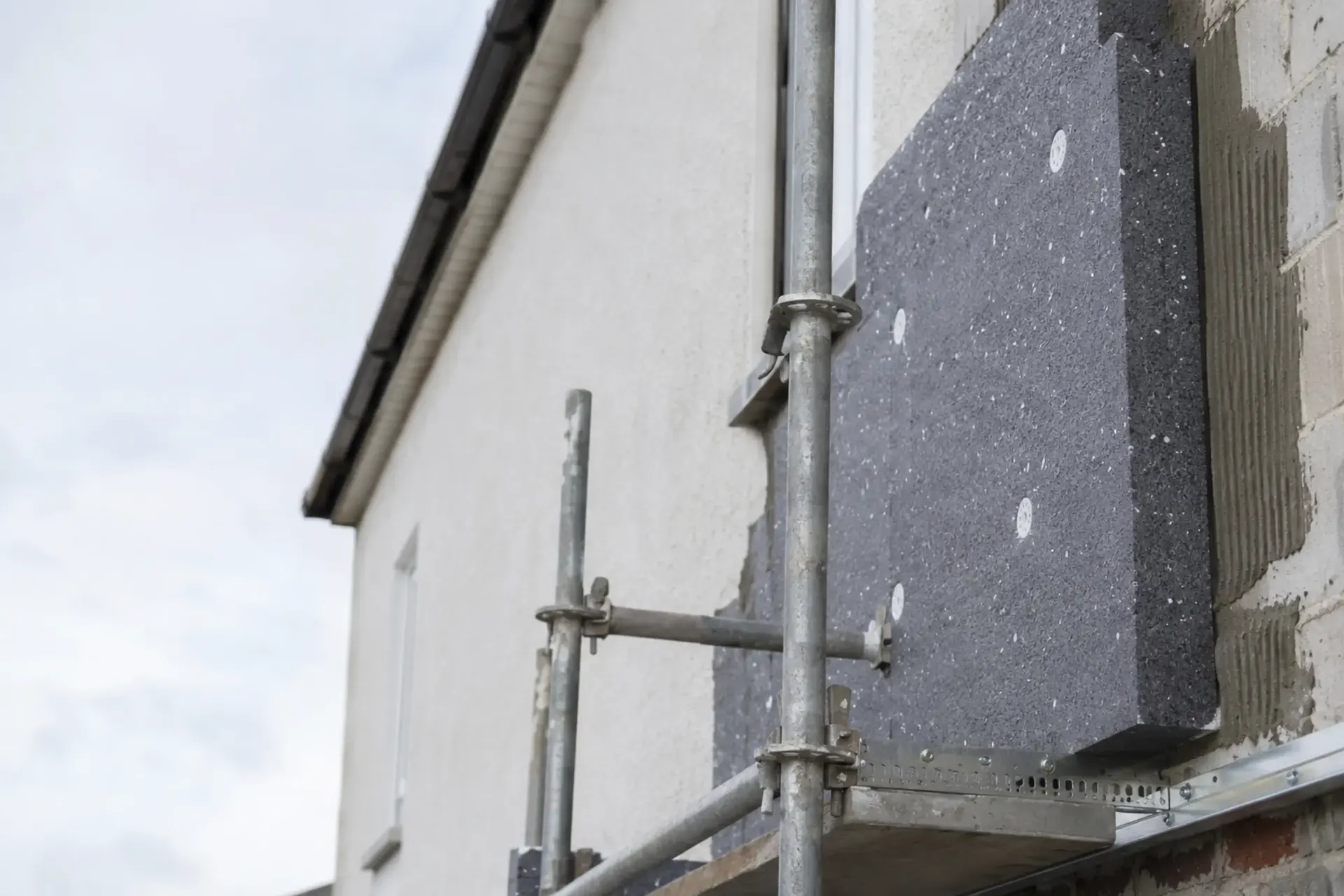
External wall insulation contractors in Dublin fix insulation boards to the outside of your walls and finish them with render, so the house sits inside a continuous warm layer rather than losing heat through the masonry.
The pre-war terraces and the older inner suburbs are the solid-wall stock that external insulation is made for. Newer estates usually have a cavity worth filling first, so establishing which you have is the single most useful thing to do before getting quotes.
What the walls are made of matters. Solid brick in the pre-war terraces and inner suburbs, solid block through the 1950s and 1960s, cavity standard from the 1980s. That is the single most useful thing to establish before you get quotes, because it decides whether external insulation or a cavity fill is the right job.
The 55 contractors listed below are drawn from the official SEAI register and cover Dublin, Swords, Lucan, Balbriggan, Blanchardstown, Tallaght, Dun Laoghaire and Rathmines.
What Dublin Weather Means for Your Render
Exposed to both Atlantic and Irish Sea storms, which bring coastal and surface flooding.
Dublin is a coastal county with roughly 750mm of rain a year, which puts local exposure in the moderate band. The render is what stands between the boards and that weather, so a system specified for a sheltered inland site is not the one you want at moderate exposure, and the difference shows up in five years rather than five months.
Locally this is coastal capital county on Dublin Bay, which changes how exposed one site is against another a few miles away. Ask each contractor quoting around Dublin, Swords and Lucan what render they are proposing and why it suits your particular wall and aspect. Salt and wind-driven rain are the specification drivers here, so the render is chosen for the coast rather than the price list.
Towns and Areas Covered
Dublin, Swords, Lucan, Balbriggan, Blanchardstown, Tallaght, Dun Laoghaire, Rathmines, Malahide, Donabate, Blackrock, Clondalkin, Skerries, Howth, Rush, Portmarnock, Sandyford, Santry, Raheny, Finglas
Nearby Counties
SEAI-Registered External Wall Insulation Contractors in Dublin
55 contractors registered with SEAI for external wall insulation, 55 with direct contact details.
Nothing matches that. Try a county name, or clear the search.
Working out What Your Dublin Walls Are Made Of
Solid brick in the pre-war terraces and inner suburbs, solid block through the 1950s and 1960s, cavity standard from the 1980s. Knowing which you have decides the whole job, because external insulation and cavity fill solve the same problem in completely different ways, and at very different prices.
Dense urban and suburban housing with smaller front driveways where kerb appeal and drainage both matter. That shapes what you are likely to be dealing with around Dublin, Swords and Lucan, and age is the fastest first guess: the older the house, the more likely the wall is solid with nothing inside it to fill. It is the reason 55 contractors are registered for this measure in Dublin rather than cavity fill alone.
Two checks are worth doing yourself before anyone visits. Measure the depth of an external window reveal, since a solid wall is typically around 230mm through and a cavity wall closer to 300mm. Then look at the brick pattern anywhere the wall is not rendered, because a solid wall usually shows alternating short and long bricks where a cavity wall shows long ones only.
Neither test settles it on a rendered house, and across Dublin that covers most of the older stock, so a contractor will confirm it properly on the first visit. With Dublin being coastal capital county on Dublin Bay, it is also worth flagging site access when you ring, because that is the other thing that moves a quote.
Quick Guide by Era
- Pre-1940sStone or solid brick. Solid, no cavity. External insulation is usually the only route.
- 1940s to 1970sSolid concrete block, or a cavity too narrow to fill well. External insulation is normally the better answer.
- 1980s onwardCavity construction as standard. Filling the cavity is usually cheaper and comes first.
- Post-2008Built to modern standards and already insulated. External insulation rarely stacks up.
How an External Wall Insulation Job Runs in Dublin
The sequence is the same everywhere. What changes in Dublin is access, exposure and how much weather the programme has to work around, and those are the three things worth raising when you ring for a quote.
Survey and Wall Check
The contractor confirms whether the walls are solid or cavity, measures up, and flags anything that has to be repaired first. That matters more than usual in Dublin, where solid brick in the pre-war terraces and inner suburbs, solid block through the 1950s and 1960s, cavity standard from the 1980s. Any active leak, failed gutter or cracked downpipe gets fixed before insulation goes near the wall.
Scaffold and Strip Back
Scaffold goes up, then downpipes, sills, vents, satellite dishes and any external fittings come off so the insulation runs behind them rather than stopping short. On exposed coastal sites the scaffold often needs extra tying, which can add to the cost.
Base Rail and Boards
A base rail is levelled along the bottom of the wall and boards are fixed course by course from there, bonded and mechanically fixed back into the masonry. With Dublin exposure rated moderate, the number and pattern of mechanical fixings is specified for the wind load rather than picked off a standard detail.
Mesh and Base Coat
A base coat goes over the boards with reinforcing mesh embedded in it, and beading is fitted to every corner and reveal. This layer is what makes the finish durable rather than fragile, and it needs a dry spell to go on cleanly, which is the practical constraint at 750mm of rain a year.
Render and Reinstatement
The topcoat render goes on in your chosen finish and colour, then everything that came off the wall is re-fixed over the new surface. Salt and wind-driven rain are the specification drivers here, so the render is chosen for the coast rather than the price list.
What External Wall Insulation Costs in Dublin
External wall insulation in Dublin typically runs €12,000 to €18,000 for a three-bed semi before any grant, with the SEAI grant currently €8,000. What moves the figure locally is the size of the house, how much detailing there is around windows and doors, and how easily scaffolding sets up on your site.
| Property | Before grant | After €8,000 grant |
|---|---|---|
| End-of-terrace, 3 bed | €10,000 to €15,000 | €2,000 to €7,000 |
| Semi-detached, 3 bed | €12,000 to €18,000 | €4,000 to €10,000 |
| Detached, 4 bed | €16,000 to €25,000 | €8,000 to €17,000 |
| Large bungalow | €18,000 to €30,000 | €10,000 to €22,000 |
These are indicative market ranges to help you judge whether a quote is in the right area, not a price. What a job actually costs turns on the size and condition of the property, the state of the existing render or walls, access and scaffolding, the finish chosen and how exposed the site is. Get at least two quotes from SEAI-registered contractors. Grant figure checked against SEAI on 31 July 2026.
What Pushes a Dublin Quote Up
Detailing is the main one. Every window and door reveal has to be returned, beaded and finished, so a house with a lot of openings costs more than a plain gable of the same area. Bay windows, porches and awkward junctions all add labour, which is worth bearing in mind given dense urban and suburban housing with smaller front driveways where kerb appeal and drainage both matter.
Coastal exposure matters here too. A render system rated for severe wind-driven rain costs more than a basic one, and on this coast it is the right call rather than an upsell. Dublin being coastal capital county on Dublin Bay is worth mentioning on the phone, because it changes what a contractor allows for.
If the Cost Is out of Reach in Dublin
The SEAI Warmer Homes Scheme provides upgrades free of charge to eligible households, based on receipt of certain social welfare payments rather than on the house itself. It is a different route from the standard grant, not a discount on it, and the waiting list is long, so applying early matters.
Through a One Stop Shop the grant comes off the price upfront. Apply yourself and you pay in full, then SEAI pays you back once the work is signed off.
Check What Grant You Qualify ForExternal Wall Insulation in Dublin: Common Questions
How Many External Wall Insulation Contractors Are There in Dublin?
There are 55 SEAI-registered external wall insulation contractors covering Dublin. Every one is drawn from the official SEAI register, which is what keeps the work grant-eligible.
Does My Dublin Home Need External or Cavity Insulation?
Solid brick in the pre-war terraces and inner suburbs, solid block through the 1950s and 1960s, cavity standard from the 1980s. If your walls have a usable cavity, filling it is normally cheaper and less disruptive. If they are solid, there is nothing to fill and external insulation is the practical route to a warm wall. A contractor can establish which you have in a single visit.
Does the Weather in Dublin Affect the Render?
Exposed to both Atlantic and Irish Sea storms, which bring coastal and surface flooding. Exposure here is rated moderate, with roughly 750mm of rain a year, so the render system should be specified for the location rather than chosen on price alone. Any contractor worth hiring will raise this before quoting.
How Much Does External Wall Insulation Cost in Dublin?
As an indicative range, a three-bed semi is typically €12,000 to €18,000 before any grant, with the SEAI grant for external wall insulation currently €8,000. That is market guidance to judge a quote against, not a price. Access matters locally: Dublin being coastal capital county on Dublin Bay means homes on tight town-centre sites or awkward ground can carry higher scaffolding costs than a straightforward suburban semi.
Which Towns in Dublin Do EWI Contractors Cover?
The contractors listed here work across Dublin, including Dublin, Swords and Lucan, along with Balbriggan, Blanchardstown, Tallaght, Dun Laoghaire and Rathmines. Most travel well beyond their registered address, so it is worth ringing a contractor based a county over rather than assuming they will not come. Neighbouring Meath, Kildare and Wicklow also carry registered EWI contractors.
When Should I Book the Work in Dublin?
External wall insulation is a wet trade and the render needs dry, mild conditions to cure properly, so the practical working window narrows through autumn. Given Dublin sees around 750mm of rain a year and exposure rated moderate, booking earlier in the season gives your contractor the best chance of a clean run at it.
How Is the SEAI Grant Paid in Dublin?
Through a One Stop Shop the grant comes off the price upfront. Apply yourself and you pay in full, then SEAI pays you back once the work is signed off. The grant for external wall insulation is €8,000, checked against SEAI on 31 July 2026. It works the same way everywhere in the country, so there is nothing specific to Dublin beyond choosing a contractor on the SEAI register, which every contractor listed on this page is.
Get Quotes from Dublin EWI Contractors
Contact the 55 SEAI-registered external wall insulation contractors covering Dublin directly. Compare three quotes, check the register, and get the work done while the weather still allows it.